
As it is every year, the VDC’s national conference was about more than the main-stage presentations. Its dedicated research stream and concurrent workshops gave delegates the opportunity to examine emerging evidence, learn from provider initiatives and take practical ideas back to their classrooms and organisations.
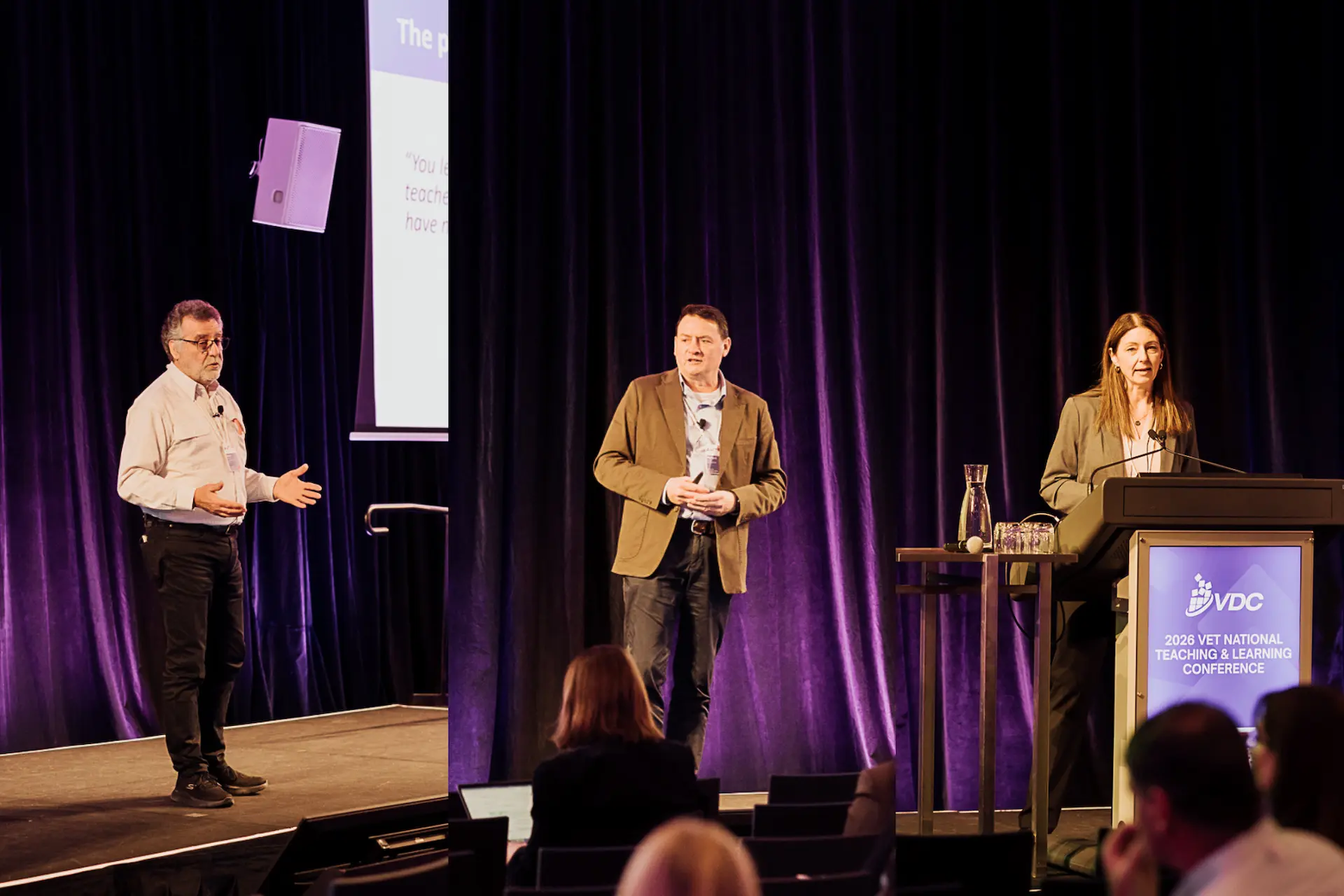
Holmesglen Institute’s Mark Mossuto presented on the Aspire Mentoring Program as a practical way to build teacher capability through structured professional relationships. With funding support from the VDC’s Workforce Development Grants program (supported in turn by the Victorian Skills Authority), the Aspire Program demonstrates how mentoring can give educators space to reflect on practice, learn from experienced colleagues, build confidence and feel more connected to their organisations. The results spoke for themselves: a significant improvement in practical mentoring skills pre- and post-program.
South West TAFE’s Richard Snook shared a similarly proven approach to developing peer support leaders within VET, again with funding support from the VDC. The model recognises that colleagues are often the first people educators turn to when they are under pressure, and that informal support is stronger when selected staff have the skills, confidence and boundaries to listen and guide people towards appropriate help.
NCVER’s Dr Tabatha Griffin gave delegates an early look at forthcoming research on strengthening VET teacher capability and responding to learners’ psychosocial needs. The work, funded by the Australian Government, recognises that teachers increasingly support learners facing complex wellbeing and participation barriers and will shortly be released on the NCVER website.
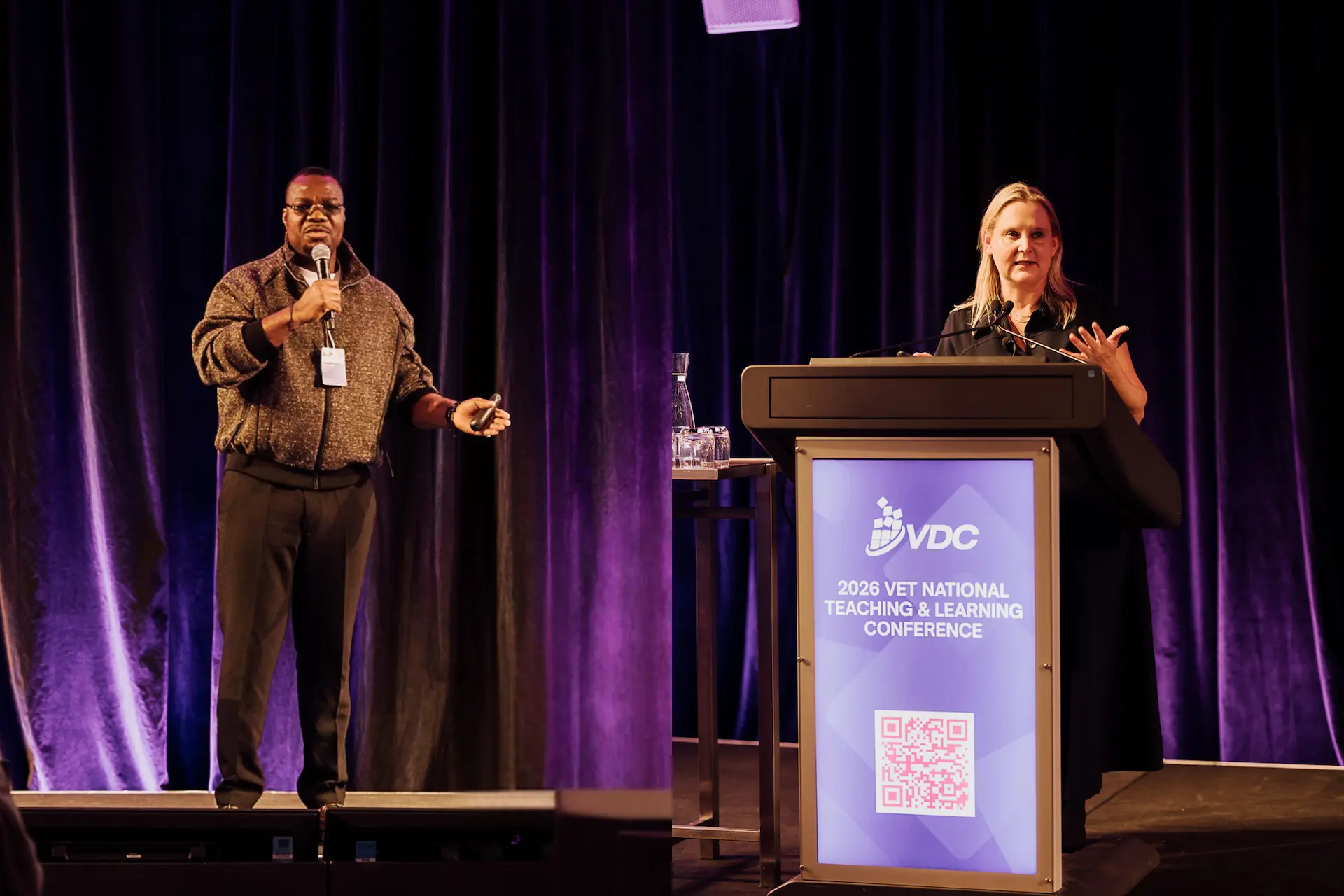
RMIT University’s Joseph Osimobi explored what it means to build a supportive and trauma-informed VET workplace. In doing so he highlighted the emotional impact of working with people who have experienced trauma and the risks of burnout and secondary traumatic stress. He also pointed to the practical organisational responses that can improve staff wellbeing and thus the quality of support provided to learners.
Melanie Reynolds, also from RMIT University, drew on work supported through a VDC Workforce Development Grant and an International Specialised Skills Institute fellowship to examine everyday wellbeing for VET educators. Her key message was that solutions cannot rest solely on individual resilience, sustainable wellbeing requires a whole-of-system approach to the conditions, culture and structures in which educators work. She also highlighted the cumulative value of small everyday interactions in creating safety, connection and a culture in which both staff and learners can flourish.
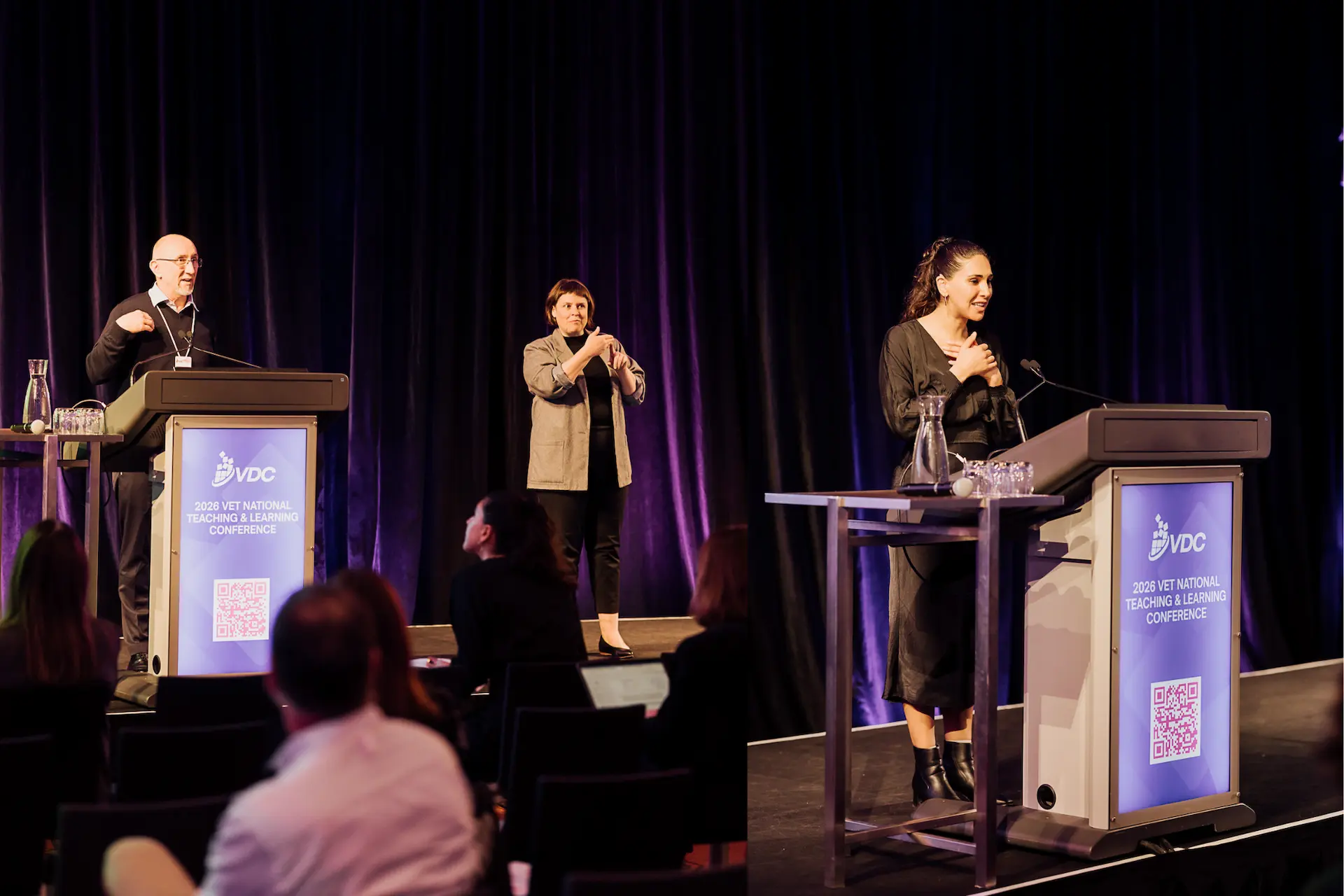
Melbourne Polytechnic’s Joe Sabolcec and Deaf Victoria’s Raquel Fasano explained the work they had done (again supported by the VDC) to a ‘Navigating TAFE’ video which was originally developed in 2008 to help Deaf and hard of hearing students. The new video ‘In the Classroom’ is available to all training providers to support the inclusion of Deaf and hard of hearing students in classrooms.
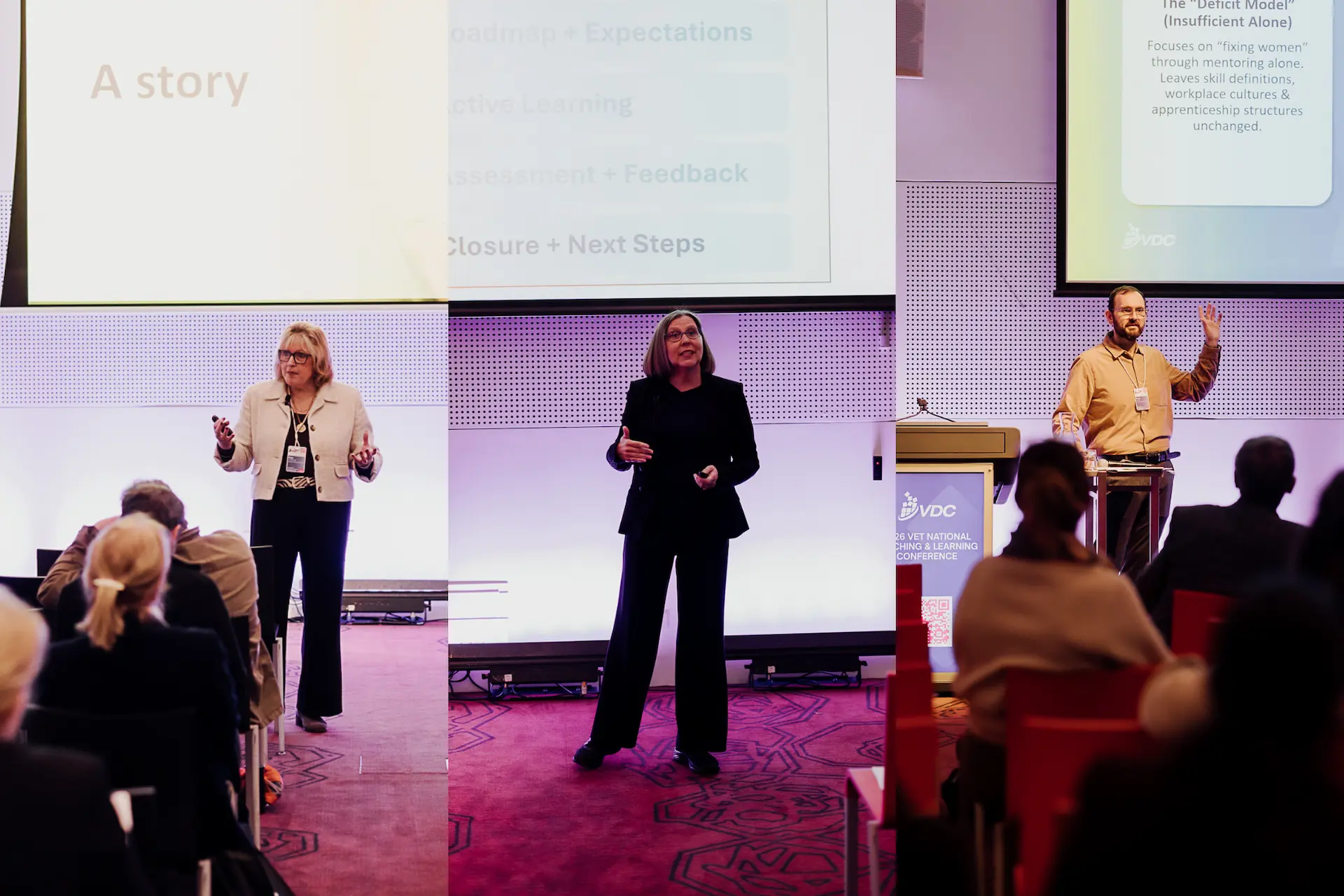
Finally three leading VET educators gave three workshops each providing practical examples and insights to delegates on how to improve their teaching practice:
- Kay Schlesinger’s flipped workshop, Think Listen Talk Thrive, combined communication, learning and wellbeing to help delegates explore metacognition, listening, reflective practice and creative sketch-noting.
- Dr Deniese Cox showed how two relatively small learning-design changes can improve student engagement while reducing educator workload. Her research-informed strategies included giving delegates a simple communication framework to support more learner engagement with educational content, and
- Victoria University’s VU TAFE’s Paul Hrasko focused on building safe, inclusive and gender-equitable classrooms – giving educators practical ways to create trust, embed gender-equitable practice and support increasingly diverse learner cohorts without compromising teaching quality.
The VDC thanks all presenters, delegates, sponsors and members of the VDC team who made another sold-out conference possible.
The VDC also welcomes delegates’ feedback on the annual conference and all of its professional learning programs. Conference participants are encouraged to complete the evaluation form they received and to share the ideas they intend to apply in their teaching, teams and organisations.
“The amount of amazing speakers with a wealth of knowledge and insight that supports the VET industry and educators is vital. VDC brings it all together.” 2026 Delegate
VDC would like to thank this year’s Conference Sponsor