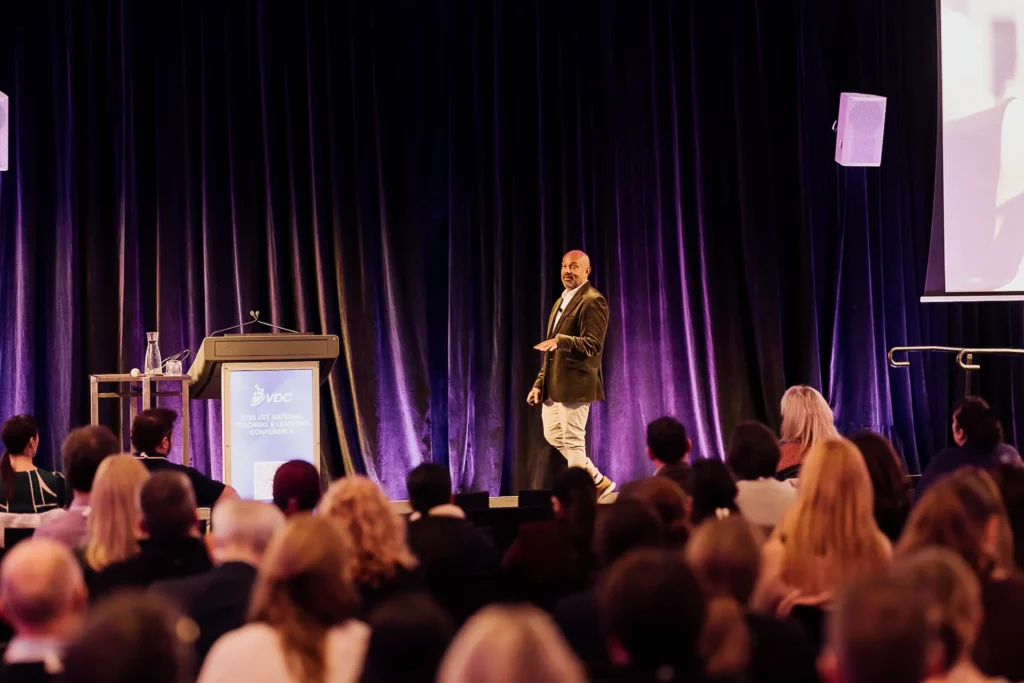
There were also a range of stimulating and thought provoking sessions during the two days of the conference presented by VET sector educators, experts and leaders. And bringing the whole conference together was the formidable Chemène Sinson, whose experience, warmth, knowledge and humour connected the sessions across both days.
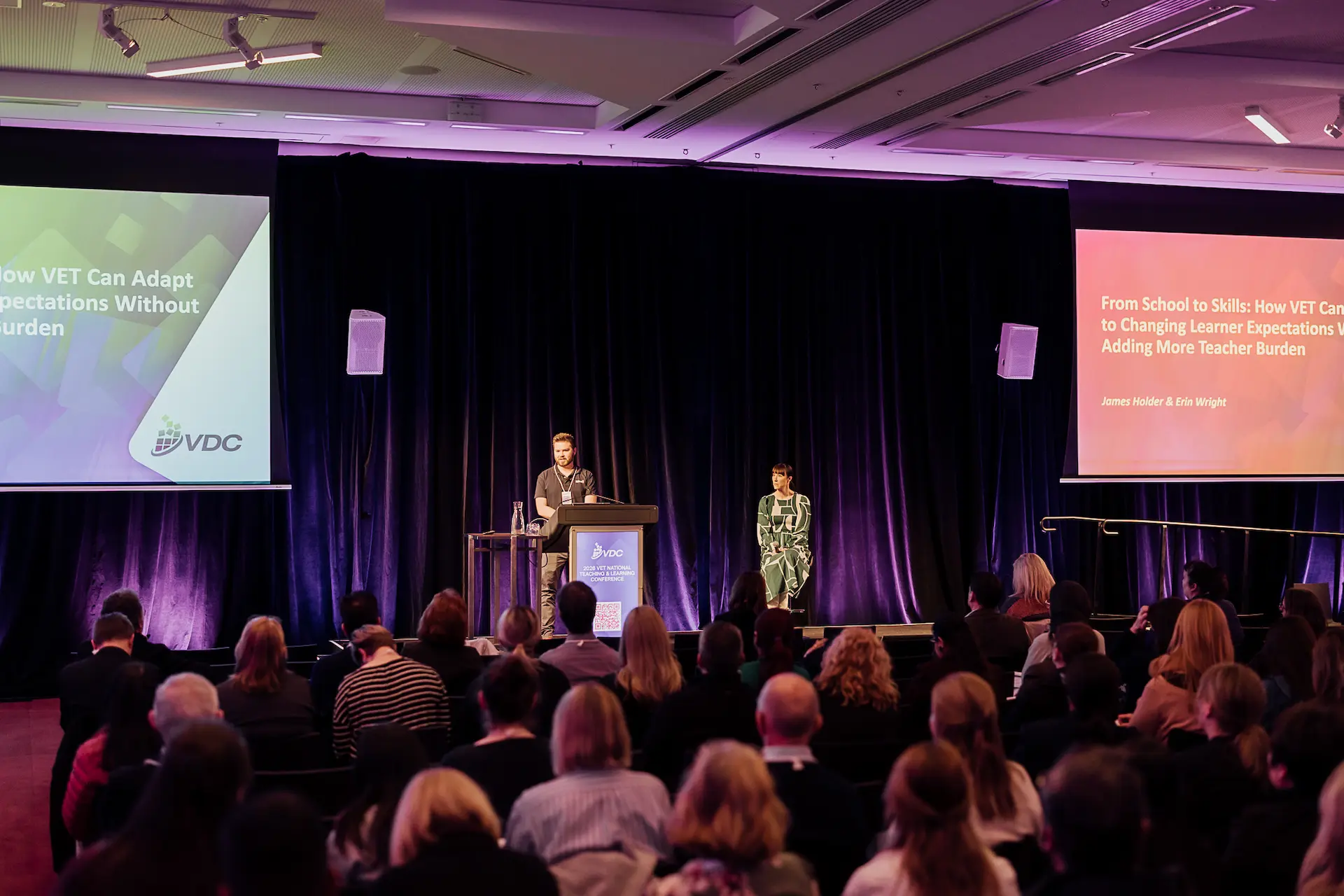
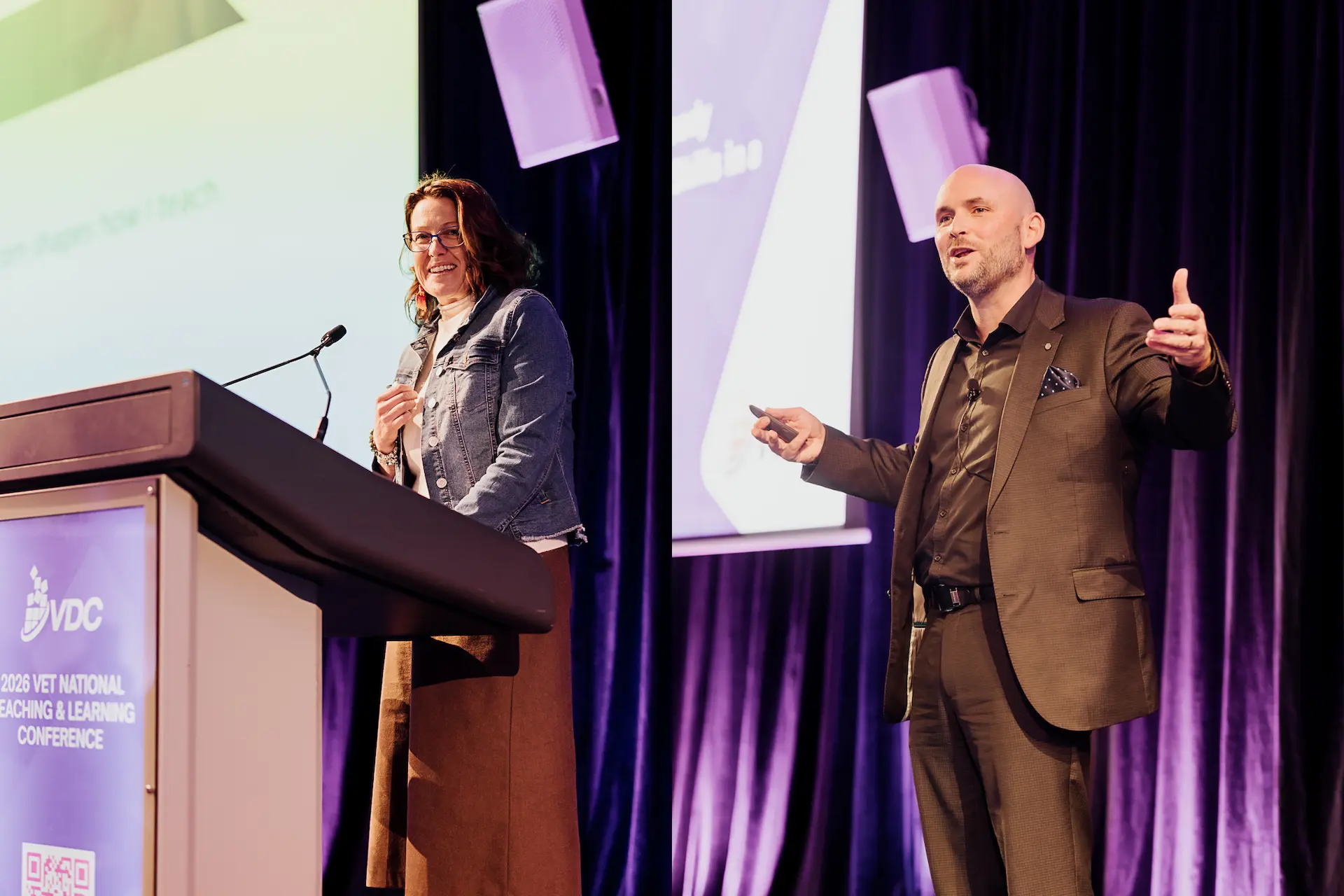
James Holder from Kahoot! and Erin Wright from The Gordon explored how VET can respond to learners arriving from schools with different expectations of digital, interactive and participatory learning. Rather than proposing wholesale technology changes, they encouraged educators and leaders to ask better questions about the tools they already use. Their practical message was that technology should help teachers make learner understanding visible, support engagement and provide formative feedback, and reduce rather than add to teacher preparation and administrative burdens.
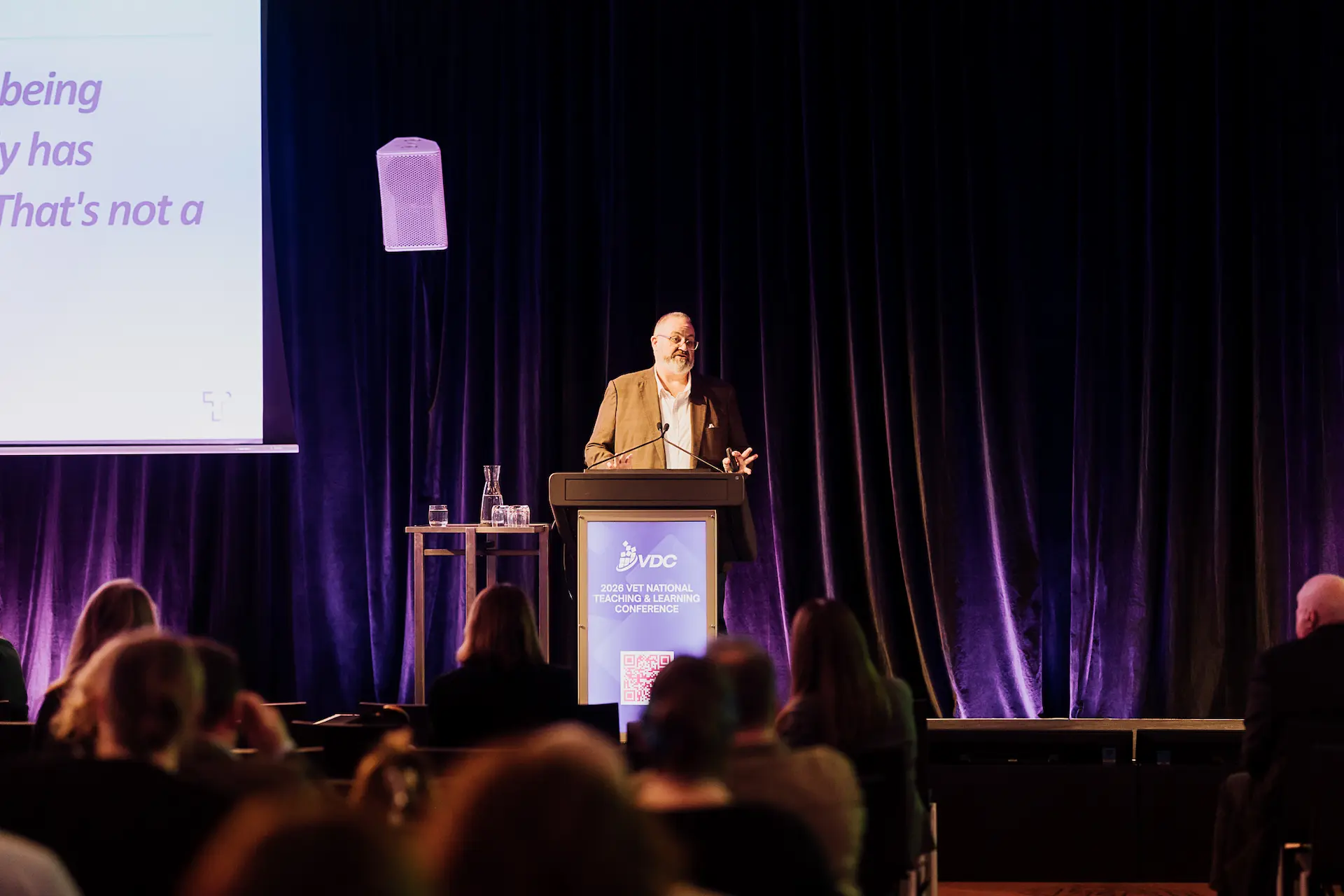
Matt Peachey, CEO of TLRG (ROBOT by TLRG), argued that digital capability is not simply a tools problem or an individual responsibility – instead it is an organisational obligation. Educators are being asked to teach in a world of rapidly changing platforms and expectations, often without the time or structure to develop lasting capability. He argued that organisations need to move beyond one-off training and invest in structured development that builds confidence, judgement and adaptability. In doing so this will help teachers feel more confident and capable especially in a world of rapidly changing technology.
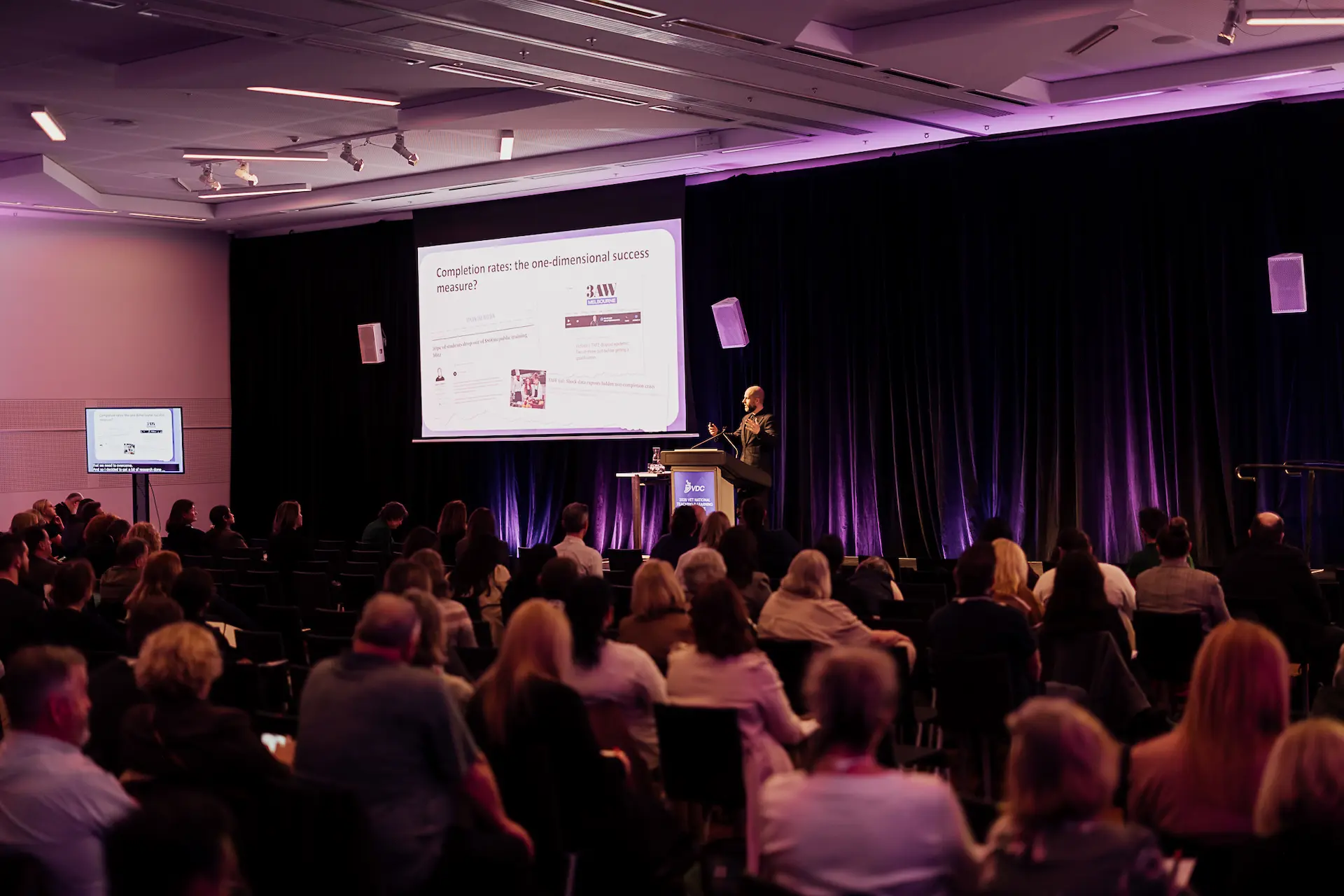
Victorian TAFE Association CEO Alex White challenged the sector’s heavy reliance on completion rates as the measure of TAFE success. He highlighted that 91 percent of TAFE students achieve or partly achieve their employment goals, prompting delegates to think more broadly about outcomes such as skills gained, confidence, capability, employment progress and the achievement of a learner’s real-world purpose. His presentation was a timely reminder that learners enrol in VET for different reasons and that a single measure can obscure much of the public value created by TAFE Institutes and other VET providers.
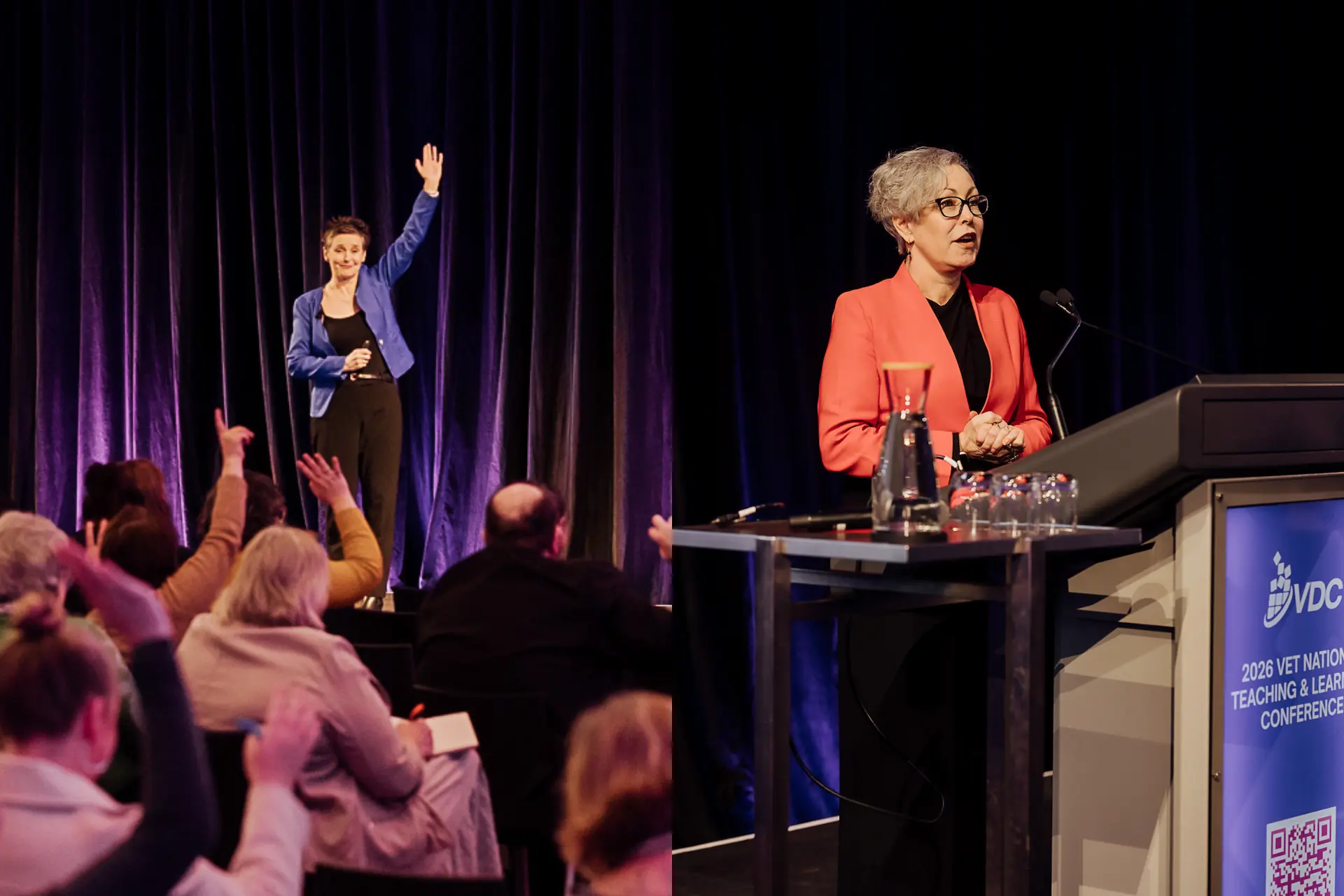
Michele Tocci, Speaker – Workplace trainer & Coach, drew on neuroscience and real life to give conference delegates her insights in critical thinking and how we can design environments in which critical thinking can flourish. Two memorable messages she shared were that our brains need a break approximately every 20 minutes to improve our critical thinking and yet we frequently do not design this into our teaching and learning practices, and that we have typically designed our classrooms for sitting and keeping quiet. Instead she challenged delegates to let students stand and interact with each other.
VDC News’ ghostwriter, Claire Field, drew on Australian and international research to examine the links between educator wellbeing and learner outcomes. The research identifies stress as an issue in a number of different VET systems across the world and what different governments are doing in response; as well as highlighting the benefits of working to encourage higher staff retention in VET because of how it protects relationships, expertise and learner momentum. The session also considered how funding and policy settings shape teachers’ working conditions, and why organisations need to give educators the time, professional learning and confidence to adapt their practice in an AI-driven world.
Andrew Shea from Skilled Nation focused on the transferable capabilities learners will need as a range of factors, including but not limited to AI, changes the tasks, tools and requirements within occupations. Alongside current technical competence, he highlighted communication, judgement, digital capability, adaptability and confidence as skills that enable learning to travel across different jobs and settings. Drawing on tech sector predictions of 1 billion humanoid robots working in our homes and alongside us in a variety of settings in the next decade, he reinforced that future-ready learners will depend more than ever on capable educators who are trusted and supported to design meaningful learning.
The 2025 Victorian Teacher/Trainer of the Year and Australian Training Awards runner-up, Tarmi A’Vard shared a deeply learner-centred approach to teaching, drawing on her expertise in the criminal justice system. Her session brought together flipped learning, trauma-aware practice and future-focused delivery, while reminding delegates of the profound influence educators can have on students’ confidence, growth and sense of belonging. Her presentation demonstrated the importance of thoughtful flexibility, micro-reflections and high expectations to help learners build the skills and agency for their future careers, irrespective of their current personal circumstances.
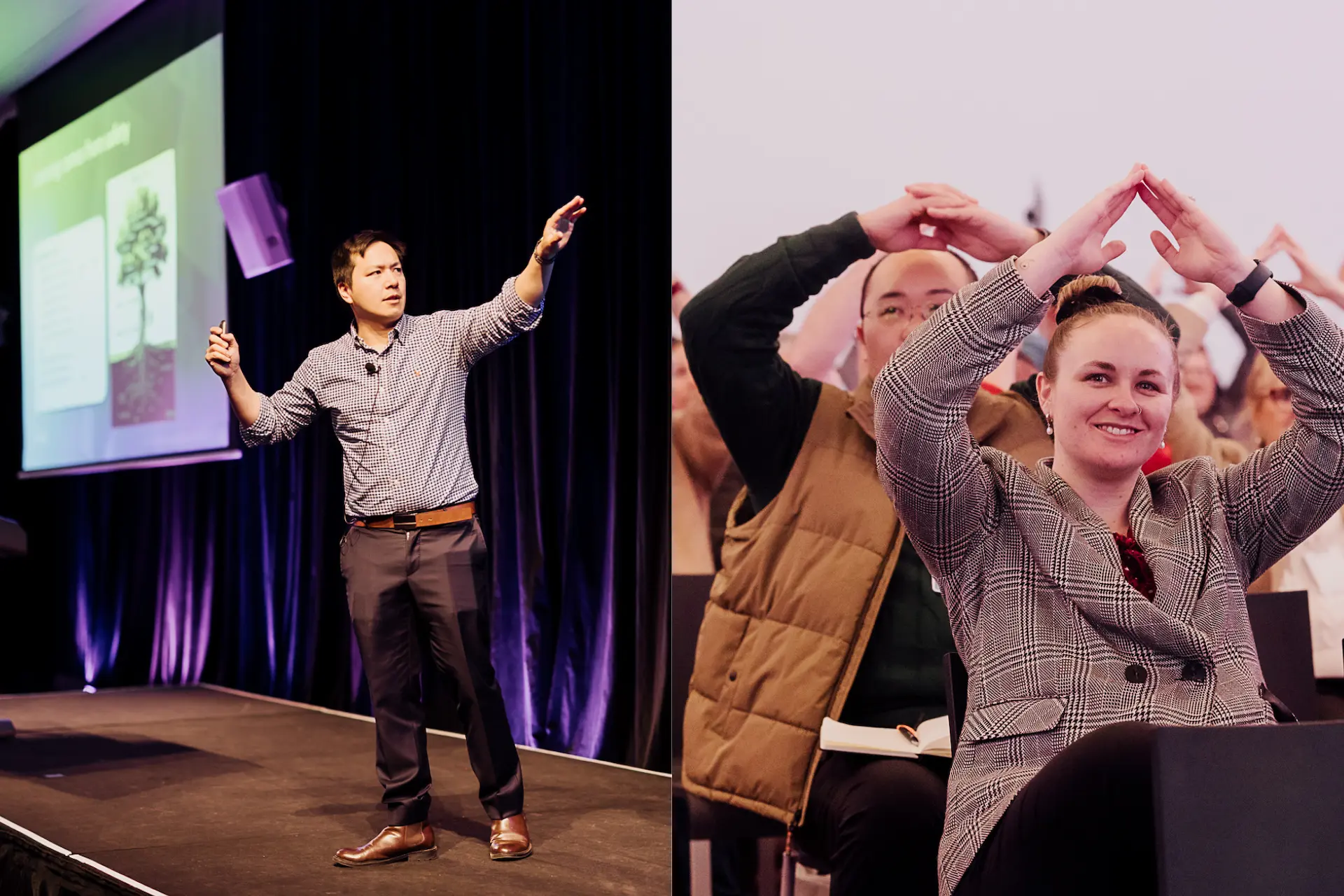
Counsellor, Samuel Tan turned trauma awareness into a thoughtful, interactive session in which delegates reflected on common feelings and experiences in teaching and training. He shared practical trauma-aware strategies for strengthening learner engagement and wellbeing, including ways educators can use AI to review learning materials and introduce more trauma-informed language. His message was how teachers can create safer learning conditions, respond with greater awareness and connect learners with appropriate support where needed.
“An outstanding conference with so many great presentations and innovative ideas to support educators and learners.” 2026 Delegate
VDC would like to thank this year’s Conference Sponsor